
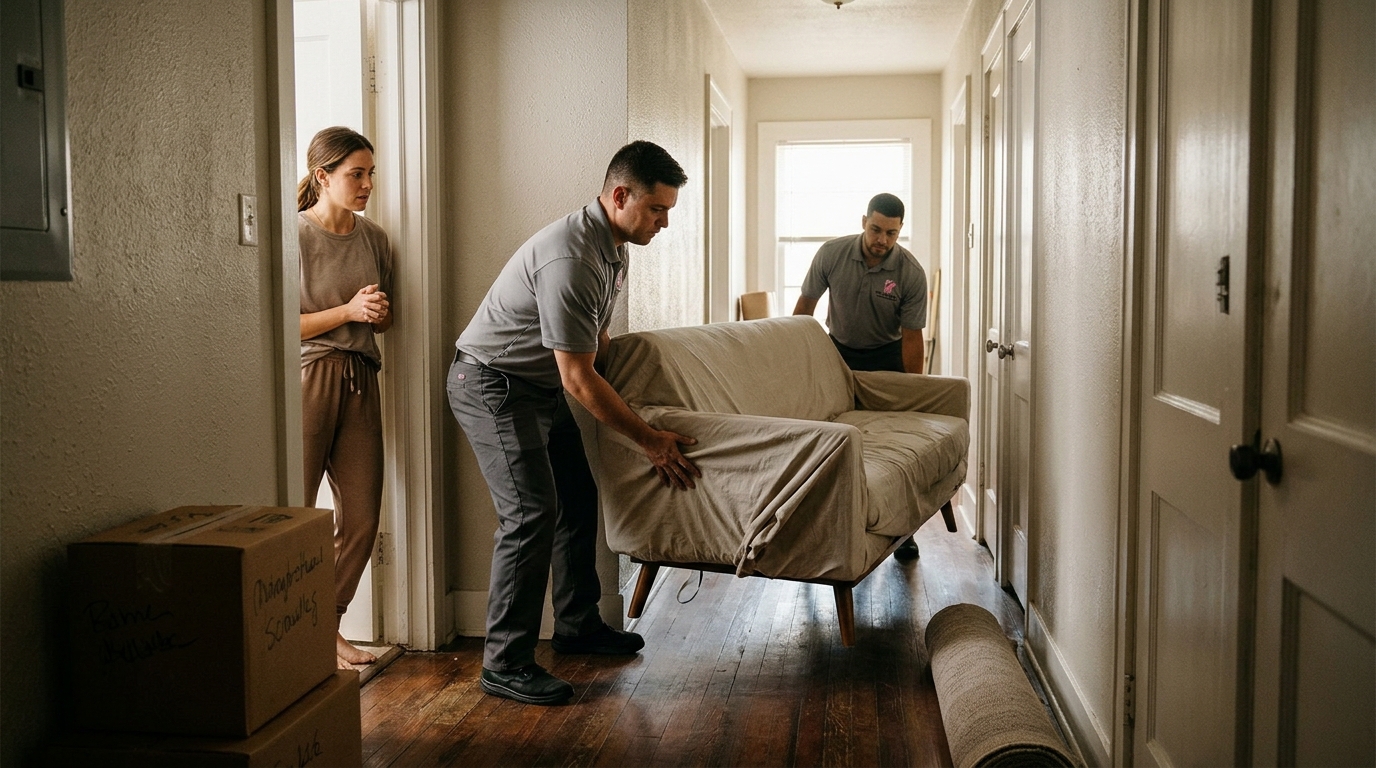
Moving into a tight Austin apartment with narrow hallways requires precise measurement, specialized equipment, and professional coordination. You should expect a detailed pre-move assessment, careful disassembly of large furniture, and a crew trained to navigate tight corners without damaging walls or doorframes. Pink Zebra Moving of Round Rock, TX specializes in these complex residential relocations, ensuring your items arrive safely despite spatial constraints.
The Critical Importance of Pre-Move Assessment
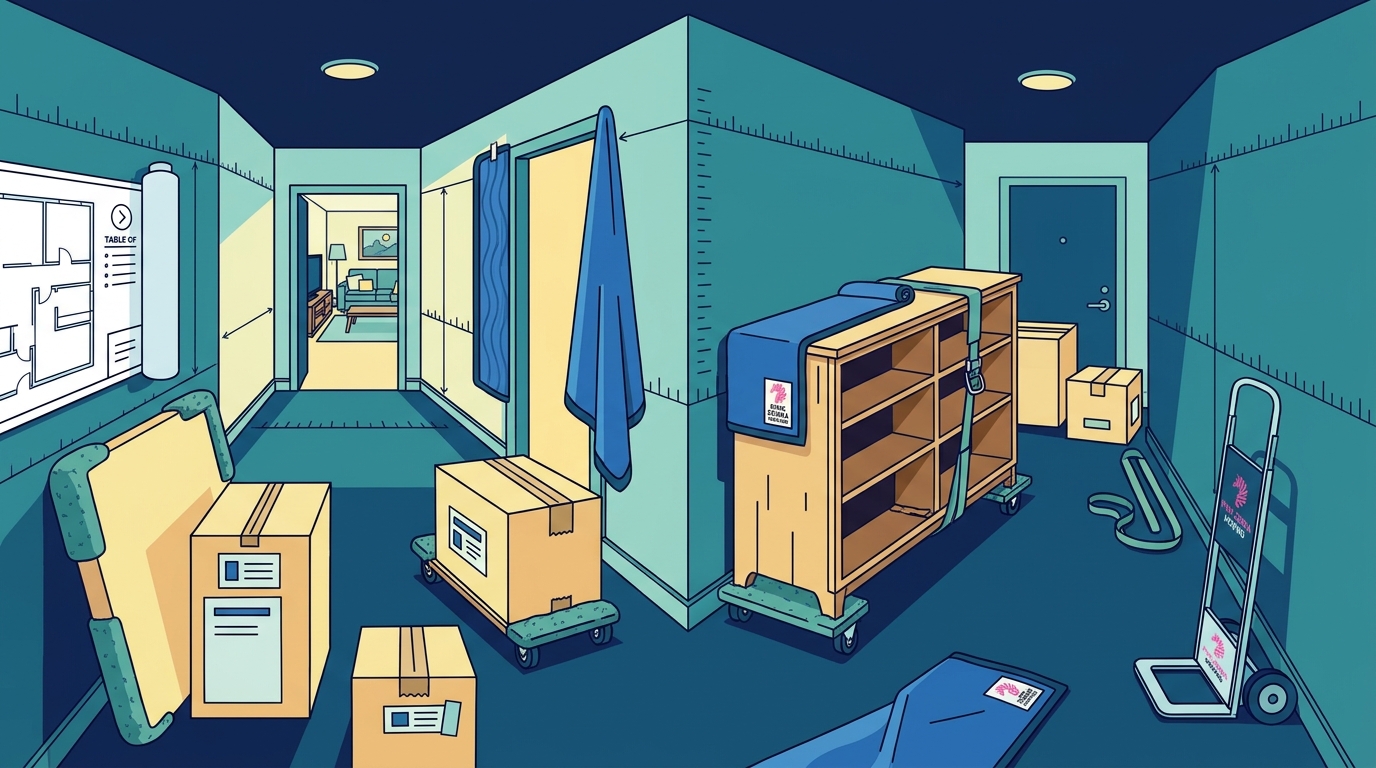
Before any truck arrives, a professional crew must evaluate the physical dimensions of your new space. Pre-move assessment is the process of measuring doorways, stairwells, and elevator shafts to determine if standard furniture will fit. In older Austin neighborhoods, such as those in East Austin or Hyde Park, architectural quirks often present hidden obstacles. A standard sofa might fit through a front door but get stuck on a narrow staircase landing. By identifying these bottlenecks early, movers can plan the optimal path for each item. This step prevents the frustration of arriving at the building only to realize a key piece of furniture cannot enter the unit.
Specialized Equipment for Narrow Spaces
Strategic Disassembly and Reassembly
When a piece of furniture is too large for the hallway, disassembly becomes the primary solution. Furniture disassembly is the controlled breakdown of items into smaller components that can fit through tight spaces. This process requires specific tools and knowledge of the furniture's construction. A professional crew will carefully remove legs, shelves, and doors, labeling each part for easy reassembly. This approach is far safer than attempting to force a large item through a narrow opening, which can result in broken furniture or damaged walls. For items that cannot be disassembled, such as a solid wood bed frame, movers may need to use a crane or a specialized lift, depending on the building's exterior access. Planning for disassembly ensures that your favorite pieces are not left behind.
Navigating Building Protocols and Access
Many Austin apartments have strict rules regarding moving day logistics. Building access protocols are the set of guidelines that govern how movers can enter, exit, and use common areas. These rules often include designated moving hours, elevator reservations, and requirements for floor protection. Ignoring these protocols can result in fines or delays. A professional moving company will communicate with the building management in advance to secure the necessary permits and schedule elevator usage. This coordination ensures that your move proceeds smoothly without conflicts with other residents. Understanding these rules is essential for a stress-free relocation into a multi-unit building.
Crew Coordination and Communication
Successful moves in tight spaces rely on seamless teamwork. Crew coordination is the synchronized effort of multiple movers working in unison to transport items. In a narrow hallway, one person may guide the item while another provides support from behind. This requires clear communication and trust among team members. Professional crews are trained to work as a unit, anticipating each other's movements to avoid collisions and accidents. This level of coordination is difficult to achieve with a group of friends or untrained laborers. By hiring a professional team, you benefit from their experience in handling complex spatial challenges.
Key Takeaways
- Always conduct a pre-move assessment to identify potential bottlenecks in your new apartment.
- Professional movers use specialized equipment like stair climbers and corner protectors for tight spaces.
- Strategic disassembly is often the safest way to move large furniture through narrow hallways.
- Adhere to building access protocols to avoid fines and delays during your move.
- Effective crew coordination is essential for safely navigating complex architectural features.
- Choose a moving company with specific experience in apartment and condo relocations.
Frequently Asked Questions
How do movers handle furniture that is too big for the hallway?
Movers typically disassemble the furniture into smaller components that can fit through the space. If disassembly is not possible, they may use specialized equipment like stair climbers or, in extreme cases, a crane.
Do I need to reserve an elevator for my move?
Yes, most apartment buildings require you to reserve the service elevator for your moving day. Your moving company should handle this reservation on your behalf to ensure you have dedicated access.
What should I do if my apartment has no service elevator?
If there is no service elevator, movers will need to carry items up the stairs. This requires a larger crew and specialized equipment to ensure safety and efficiency.
Can movers damage my walls or doorframes?
Professional movers use protective padding and corner guards to prevent damage. While minor scuffs can happen, a reputable company will take every precaution to protect your property.
How much does it cost to move into a tight apartment?
Costs vary based on the size of the move, the complexity of the space, and the distance. Tight spaces often require more time and labor, which can increase the total price.
Should I be present during the move?
It is helpful to be present to direct the placement of items and answer any questions the crew may have. However, you do not need to be there for the entire duration of the move.